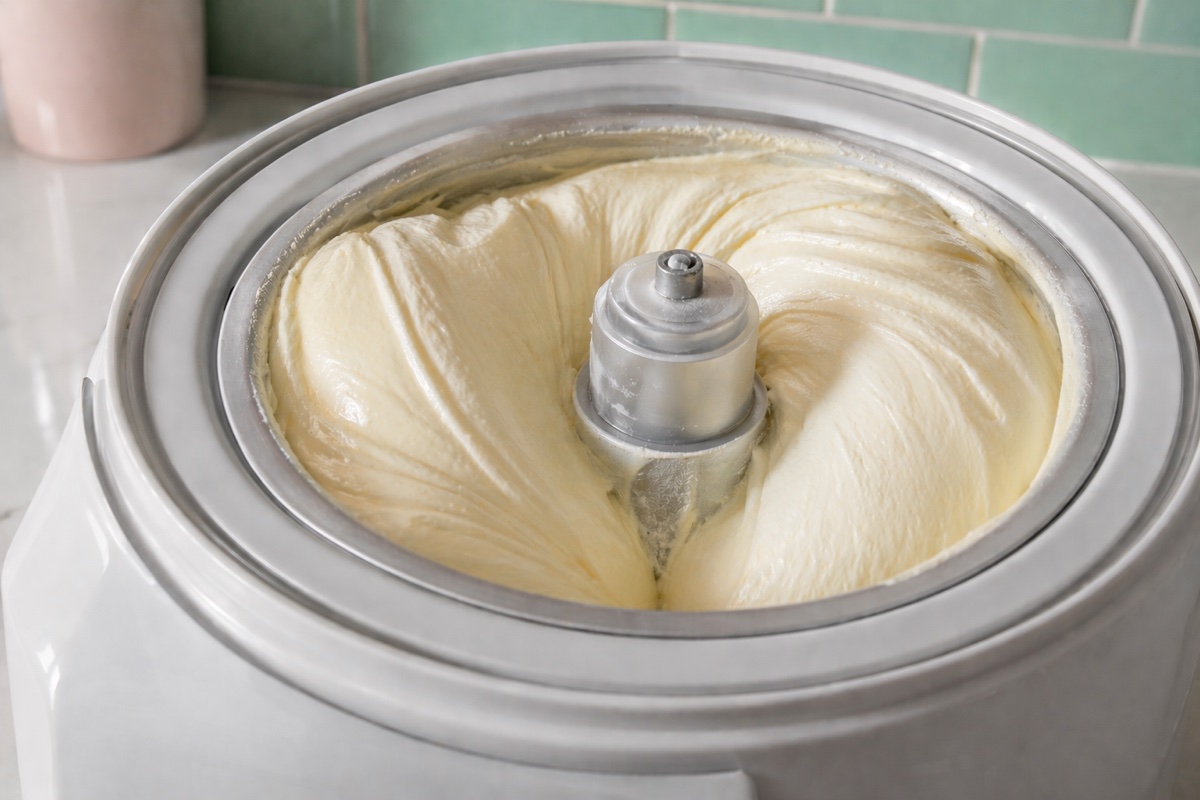
You found a gelato recipe online. The photos look incredible. You buy the ingredients, churn it, freeze it overnight - and the next day it's a block of flavored ice that bends your spoon.
Sound familiar? The problem usually isn't the recipe's flavor - it's the balance. Fat, sugar, milk solids, and water need to be in the right proportions or the texture suffers. Most internet recipes are written by taste, not by the numbers. That's fine for cooking, but frozen desserts are unforgiving.
This guide shows you how to take any recipe - from a blog, a cookbook, a Reddit post - and run it through GelatoLator to see exactly what's off and how to fix it. Think of it as a spell checker for gelato recipes.
What "Balanced" Actually Means
A balanced gelato recipe keeps several metrics within target ranges. You don't need to memorize them - GelatoLator tracks them all in real time - but here's what's going on under the hood:
- Fat (3–12%) - Controls richness and melt resistance. Traditional gelato uses less fat than ice cream, which is what gives it a cleaner flavor.
- MSNF (7–13%) - Milk solids non-fat (proteins, lactose, minerals). These give gelato its body and chewiness.
- Sugar (14–22%) - Sweetens and keeps the gelato soft by lowering the freezing point.
- Total Solids (32–42%) - Everything that isn't water. Too low = icy. Too high = gummy.
- PAC (22–32) - Anti-freezing power. The single best predictor of texture at serving temperature. Higher PAC = softer gelato.
- SP (14–21) - Sweetening power. Lets you adjust softness (PAC) without changing sweetness, by swapping sugar types.
- Serving Temperature (−16 to −11°C) - Derived from PAC. Tells you the ideal temperature for scooping.
For a deeper explanation of each metric, see How It Works.
Step 1: Enter the Recipe
Open GelatoLator and start adding ingredients from your recipe. For each ingredient:
- Click Add Ingredient
- Search for the ingredient (e.g., "whole milk", "heavy cream", "white sugar")
- Enter the weight in grams
If the recipe uses volume measurements (cups, tablespoons), you'll need to convert to grams first. This is one reason a digital kitchen scale is essential for gelato - volume measurements are too approximative for frozen desserts, and if you are using stabilizers in your recipe you have to be accurate.
Keep adding ingredients until the full recipe is entered. The balance panel on the right updates after every change, so you'll start seeing green, orange, and red indicators immediately.
Open GelatoLator and enter your recipeStep 2: Read the Balance Panel
With your recipe entered, look at the balance panel. Each metric card shows:
- The current value (what your recipe produces)
- The target range (where it should be)
- A color indicator: green (in range), orange (slightly off), red (significantly out of range)
Most internet recipes will show at least one or two metrics in orange or red. That's normal - and it's exactly why you're here.
Common patterns you'll see:
- Fat too high - The recipe uses too much cream relative to milk. This is the most common issue when converting an ice cream recipe to gelato. Ice cream targets 14–16% fat; gelato targets 3–12%.
- PAC too low / Serving temp too warm - The recipe uses only sucrose (table sugar) for sweetening. Sucrose is fine for sweetness but has relatively low anti-freezing power. The gelato will freeze rock-hard once stored.
- MSNF too low - Not enough milk solids for body. The gelato will feel thin and icy.
- Total solids too low - Too much water in the mix. Often happens when recipes call for excess whole milk without enough dry components.
Step 3: Fix the Balance
Here's how to address each common problem. Make one change at a time and watch the balance panel update.
Too much fat (common when converting ice cream recipes)
Replace some cream with whole milk. For example, if the recipe calls for 400g heavy cream, try 200g cream + 250g whole milk. This drops the fat percentage while adding MSNF.
PAC too low (gelato freezes too hard)
Replace some sucrose with dextrose or a glucose/dextrose blend. Dextrose has nearly double the anti-freezing power of sucrose per gram (PAC 190 vs 100), so swapping 30–50g of sucrose for dextrose can dramatically improve scoopability without making the gelato sweeter - dextrose is actually less sweet than sucrose.
MSNF too low (thin, icy texture)
Add skim milk powder. Start with 20–30g per 1kg batch. Skim milk powder is almost pure milk solids - it boosts MSNF and total solids without adding fat or water. Watch total solids as you go; skim milk powder pushes both metrics up quickly.
Total solids too low
This is usually solved by fixing fat and MSNF. If they're already in range but total solids are still low, a small addition of skim milk powder or a slight increase in sugar will bring it up.
Step 4: Check the Final Balance
After your adjustments, all seven metrics should be green (or at least orange - close enough to work). Pay special attention to:
- Serving temperature - If it's between -16°C and -11°C, you're in the display-case sweet spot. Home freezers run colder (-18 to -20°C), so plan to temper your gelato 5–10 minutes at room temp before scooping.
- SP (sweetening power) - Make sure it still tastes the way you want. If you swapped sugars to raise PAC, SP tells you whether the sweetness changed.
Once everything looks good, use the rescale tool if you need to adjust the batch size, then the round weights tool to snap everything to kitchen-friendly numbers.
A Real Example: Fixing a Typical Vanilla Gelato
Here's a recipe you might find online:
| Ingredient | Weight |
|---|---|
| Whole milk (3.25%) | 500g |
| Heavy cream (36%) | 250g |
| White sugar | 150g |
| Egg yolk, L | 4 yolks (68g) |
| Vanilla extract | 5g |
Enter this into GelatoLator and you'll likely see:
- Fat: 12.7% - red, too high for gelato (this is ice cream territory)
- MSNF: 5.7% - red, way below the 7–13% target - not enough body
- PAC: 20 - orange, just below the 22–32 target - will freeze hard once stored
- Total solids: 33.8% - green, fine
- Serving temp: -10.0°C - orange, slightly warm
The fix - three small adjustments:
- Reduce cream from 250g to 100g; bump whole milk from 500g to 650g. Drops fat into range and adds milk solids in one move.
- Add 50g skim milk powder. Pure milk solids - boosts MSNF for body and chewiness.
- Replace 30g of white sugar with 30g dextrose. Dextrose has nearly double the anti-freezing power of sucrose (PAC 190 vs 100), so swapping a small amount lifts PAC into range without making the gelato sweeter - dextrose is actually less sweet than sucrose.
All seven metrics are now in range: Fat 7.3%, MSNF 10.5%, sugar 14.7%, total solids 32.4%, PAC 24, SP 14, serving temp -12.1°C. Same vanilla flavor, completely different texture.
Build this recipe in GelatoLatorWhy This Matters
The difference between a recipe with balanced metrics and one without isn't subtle. It's the difference between gelato you're proud to serve and gelato you scrape out of the container with a knife.
Every internet recipe is someone's best guess. With a gelato recipe calculator, you can verify that guess in 30 seconds - and fix it in another 30.
If you've already made a batch and it came out icy, work backwards from the symptom: our Why Is My Gelato Icy? guide diagnoses the five common causes - low solids, low PAC, no stabilizer, slow freeze, bad storage - so you can fix the one that's actually yours. For fruit sorbets that froze into a brick, the sister diagnostic is Why Is My Sorbet Too Hard? - same structure, with the no-dairy math (sugar 22-30%, PAC 30-42, fruit PAC ×1.9) worked out.
If you'd rather skip the conversion step and start from a recipe that's already in the green, The Ultimate Vanilla Gelato Base gives you two pre-balanced bases (egg-based gelato alla crema and eggless fior di latte) with PAC, SP, fat, and MSNF dialled in - load either into GelatoLator and tweak from there.