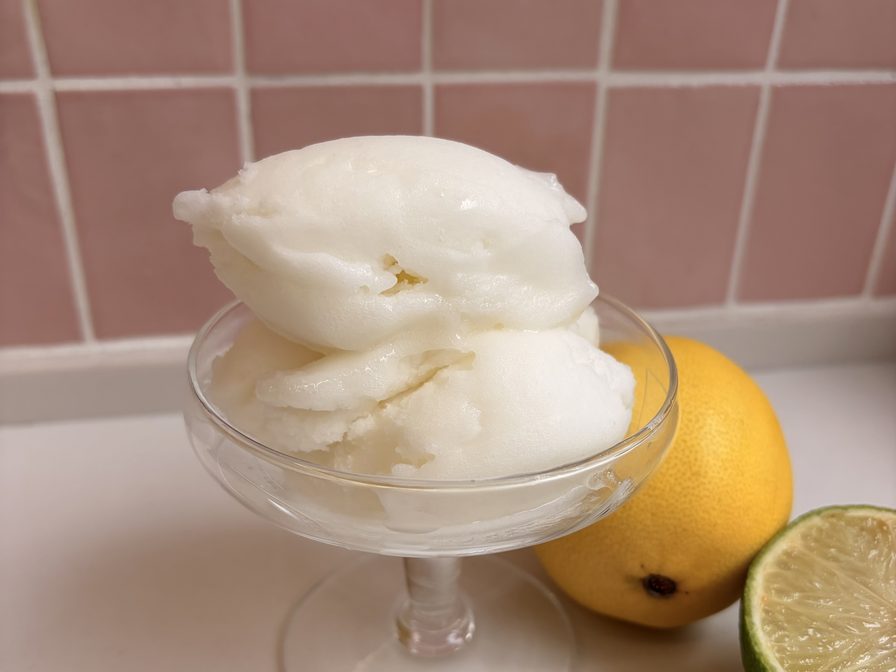
To make sorbet at home, you need a base that's about a quarter sugar by weight, dissolved in water heated to 80–85 °C, chilled for at least 4 hours, churned in an ice cream maker for 20–30 minutes, then hardened at −18 °C and served a little warmer, around −12 °C. Five steps, and the first one, getting the sugars right, decides almost everything.
Sorbet is simpler than gelato: no milk, no cream, no eggs. That's also what makes it harder to get right. In gelato, fat and milk solids help keep the texture soft. In sorbet, the sugars do all of that work, so a sorbet that tastes fine as a base can still freeze into a brick overnight. This guide goes through the five steps in order, each with its number and the reason behind it, and finishes with a balanced lemon sorbet you can open in our free sorbet calculator and change without losing the balance.
What You Need
- An ice cream maker. Churning freezes the base while stirring it, which keeps the ice crystals small. Freezer-bowl machines work well for sorbet, but the bowl needs at least 24 hours in a −18 °C freezer first. Compressor machines freeze their own bowl. If you're still choosing, here's which gelato machine a beginner should buy.
- A digital scale that reads to 0.1 g. Sorbet recipes in cups can't be balanced: a cup of sugar weighs anywhere from 190 to 220 g depending on how you fill it, and the stabilizer below is 4 g.
- An instant-read thermometer for the syrup and for checking that the base is properly cold before it goes in the machine.
- A saucepan, a fine-mesh strainer, a citrus juicer, a bowl of ice water, and a shallow, lidded freezer container.
Step 1: Balance the Sugars
Sorbet is water, sugars, fruit and usually a little stabilizer. The sugars do two jobs at once: they sweeten, and they keep part of the water from freezing. A sorbet that scoops at freezer temperature needs enough sugars to do the second job without overdoing the first. In GelatoLator's sorbet mode, a balanced base lands around:
- Sugar: 22–30% of the total weight, counting the sugar already in the fruit.
- Total solids: 28–35%. Everything that isn't water. Below about 28%, there's too much free water and the sorbet sets hard and icy.
- PAC: 30–42. Anti-freezing power: how far the sugars lower the freezing point. Too low and it's a brick; too high and it never sets.
- POD: 22–28. Sweetness, with table sugar as the yardstick. Sorbet can carry more than gelato, but past 28 the fruit gets lost.
The part most recipes miss is that the right amount of sugar depends on the fruit. Mango or banana purée brings its own sugar and pulp, so it needs relatively little help. Lemon juice brings almost nothing: it's about 92% water and just over 2% sugar. That's why the common "4 parts fruit to 1 part sugar" rule works for strawberries and fails for lemon.
Here's what that looks like in the calculator. The first column is a typical online lemon sorbet (1 cup of sugar, 1¾ cups of water and the juice of about 5 lemons), weighed in grams. The second has more sugar, and the third is the recipe at the end of this guide:
| Typical online recipe | More sugar | Balanced (this guide) | |
|---|---|---|---|
| Water | 415 g | 400 g | 400 g |
| White sugar | 200 g | 315 g | 215 g |
| Glucose powder | — | — | 100 g |
| Stabilizer | — | 4 g | 4 g |
| Lemon juice | 180 g | 280 g | 280 g |
| Sugar % | 25.7% ✓ | 32.2% (too high) | 26.0% ✓ |
| Total solids | 26.9% (too low) | 34.1% ✓ | 33.6% ✓ |
| PAC | 26 (too low) | 33 ✓ | 31 ✓ |
| POD | 26 ✓ | 32 (too sweet) | 26 ✓ |
The typical recipe passes on sugar percentage and still sets hard: with nothing in it but sugar and lemon water, there aren't enough solids, and the PAC is too low for a −18 °C freezer. Adding more sugar fixes the hardness but makes it sickly sweet. The balanced version gets its extra solids from glucose powder (atomized glucose), which adds body and some anti-freezing power at about a third of sugar's sweetness. Same softness, same sweetness as the first recipe, and it scoops. What Is PAC in Gelato? has the PAC and POD of every common sugar if you want to see why.
You don't need to work any of this out by hand. GelatoLator computes every number above as you type in your ingredients, and switches to sorbet targets when you set the recipe type to Fruit Sorbet.
Check your sorbet recipe's balanceStep 2: Make the Syrup
Target: 80–85 °C, until the syrup is completely clear.
- Whisk the dry ingredients together first: sugar, glucose powder and stabilizer. Stabilizer that meets water on its own forms rubbery lumps that never dissolve; spread through the sugar, it disperses evenly.
- Whisk the dry blend into the cold water in a saucepan, then heat it, stirring.
- Bring it to 80–85 °C and hold it there for a minute. Most stabilizer blends (locust bean gum, carrageenan) need that heat to hydrate; if yours is a cold-process blend, the label will say so, and you only need to heat until the sugars dissolve.
Keep the fruit out of the pot. Heat dulls fresh fruit flavor, and citrus is the most delicate of all: cooked lemon juice tastes flat and slightly bitter. The fruit goes in once the syrup is cold.
It's done when the syrup is completely clear, with no grains of sugar at the bottom of the pan and no specks of stabilizer.
Step 3: Chill the Base
Target: 4 °C, at least 4 hours.
Set the pan in a bowl of ice water and stir until the syrup drops below 10 °C. Then stir in the fruit: freshly squeezed lemon juice, strained so no seeds or pulp get through, or a fruit purée strained through a fine-mesh sieve. Cover it and refrigerate.
The time in the fridge does two things. The stabilizer finishes absorbing water, which thickens the base slightly, and the whole base gets properly cold. A base that goes into the machine at 4 °C freezes faster than one at 15 °C, and the faster it freezes, the smaller the ice crystals. Overnight is the easy way to fit it in: make the syrup in the evening, churn the next day.
It's done when the center of the base reads 4 °C or less. Don't keep it more than about 48 hours.
Step 4: Churn
Target: 20–30 minutes, until it looks like soft-serve.
Stir the base (it settles a little in the fridge), start the machine, then pour the base in. Poured into a still freezer bowl, a layer freezes to the wall before the paddle can move it.
Sorbet churns in a little air, though less than ice cream, and turns from a slush into something smooth and thick. It's done when:
- it's thick like soft-serve and folds over itself instead of sloshing,
- it holds a ridge on the paddle when you lift it out,
- it has lost its wet, glassy shine and looks smooth and opaque.
If it's still slushy after 30 minutes, the bowl wasn't cold enough or the base was too warm, or the base is too high in sugar and won't freeze in a home machine. A balanced base churns in the same time as gelato.
Step 5: Harden and Serve
Target: harden at −18 °C for at least 2 hours, then serve at about −12 °C.
Straight from the machine, sorbet is soft and melts fast. Spread it into a pre-chilled, shallow container, press parchment directly onto the surface so ice doesn't form on top, and put it at the back of the freezer, away from the door.
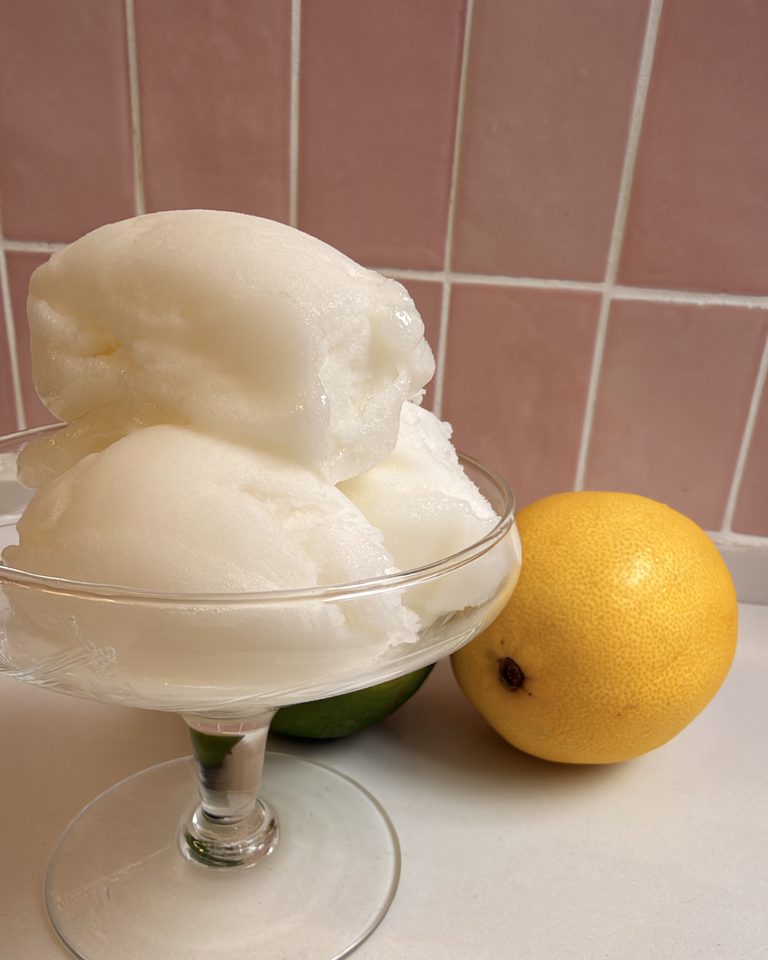
Then serve it warmer than you store it. A home freezer runs at −18 °C, and a balanced sorbet is built to scoop at its serving temperature, which GelatoLator shows on the Serving Temp card: −12 °C for the lemon sorbet below. Leave the container on the counter for 5–10 minutes, or in the fridge for 10–15, until a spoon goes in with gentle pressure.
Homemade sorbet is best within a week. After that, the ice crystals slowly grow and it turns coarse. If yours comes out hard or icy, Why Is My Sorbet Too Hard? works through the causes in order, starting with the sugars.
Your First Sorbet: Lemon
Lemon sorbet is the classic Italian sorbetto al limone, served between courses and at the end of a meal. It's also the hardest fruit to balance, because the juice brings so little of its own, which makes it the right recipe to learn on. Once lemon scoops properly, every other fruit is easier.
| Ingredient | Weight |
|---|---|
| Water | 400 g |
| White sugar (sucrose) | 215 g |
| Atomized glucose (DE40) | 100 g |
| Stabilizer blend | 4 g |
| Fresh lemon juice (about 8 lemons) | 280 g |
Makes 1 kg, about 10 servings. Prep 15 min · Cook 10 min · Total about 7 hours, including 4 hours of chilling and 2 of hardening.
Balance: sugar 26.0%, total solids 33.6%, PAC 31, POD 26, serving temperature −12.2 °C, all in GelatoLator's green zone for fruit sorbet.
Estimated nutrition (per 100 g serving): ~130 kcal · 0 g fat · 33 g carbs (26 g sugars) · 0 g protein. Calculated from the recipe; actual values vary with the exact ingredients. Dairy-free and vegan.
Method.
- Mix the dry blend. Whisk the sugar, atomized glucose and stabilizer together in a bowl.
- Make the syrup. Whisk the dry blend into the water in a saucepan and heat to 80–85 °C, stirring, until it's completely clear. Hold it there for a minute.
- Cool and add the lemon. Cool the syrup in an ice bath to below 10 °C, then stir in the strained lemon juice.
- Chill. Cover and refrigerate at least 4 hours, ideally overnight.
- Churn. Stir the base, start the machine, pour it in and churn for 20–30 minutes, until it's thick like soft-serve and holds a ridge on the paddle.
- Harden. Spread into a pre-chilled shallow container, press parchment onto the surface and freeze for at least 2 hours.
- Serve. 5–10 minutes on the counter before scooping.
For more lemon flavor, steep the finely grated zest of 2 lemons in the hot syrup as it cools, then strain it out before adding the juice. The zest carries the lemon's aroma without adding more acid.
No stabilizer? The recipe still works without it. It will turn icy sooner, so eat it within 2–3 days.
Open this recipe in GelatoLatorMaking Sorbet with Other Fruit
The method stays the same for any fruit. What changes is Step 1: how much sugar and glucose the fruit needs. Pulpy fruits like mango, peach and banana bring their own sugar and solids, so they need less sugar and often no glucose powder. Watery ones like watermelon and citrus need more help. Load the lemon sorbet into the calculator, replace the lemon juice with your fruit, and adjust the sugars until every card is green.
Why Is My Sorbet Too Hard? has a balanced strawberry sorbet and explains how fruit pulp and sugar type change the texture. For the dairy side of the same process, How to Make Gelato at Home follows the same five stages with milk and cream.
People Also Ask
Can I use my ice cream maker to make sorbet?
Yes. Any ice cream maker makes sorbet, using the same bowl and paddle as for ice cream or gelato. The only thing to check is that a freezer bowl is fully frozen, since a sorbet base has no fat to help it thicken.
How long do you churn sorbet in an ice cream maker?
About 20–30 minutes in most home machines, until it's thick like soft-serve and holds a ridge on the paddle. If it's still slushy after 30 minutes, the base or the bowl wasn't cold enough, or the base has too much sugar.
How do they make sorbet so creamy?
Professional sorbet is balanced for its serving temperature, uses more than one kind of sugar (usually sucrose plus glucose or dextrose), includes a stabilizer, and is churned in a machine that freezes it very fast. At home, the first three are easy to copy, and they make the biggest difference.
Can I make sorbet without an ice cream maker?
Yes, but expect a coarser texture. Pour the chilled base into a shallow metal pan, freeze it, and scrape it hard with a fork every 30 minutes for 2–3 hours. The result is closer to granita. Blender sorbets made from frozen fruit are soft on the day but set very hard once frozen again.
How long does homemade sorbet last?
Best within a week in a shallow, airtight container with parchment pressed on the surface. Without stabilizer, aim for 2–3 days.
The Short Version
Balance the sugars, dissolve them in hot water, add the fruit cold, chill it, churn until it holds a ridge, harden it, then let it warm a little before you scoop. The first step is the one that decides whether the rest works, and it's the one the calculator does for you.
Build your sorbet in GelatoLator