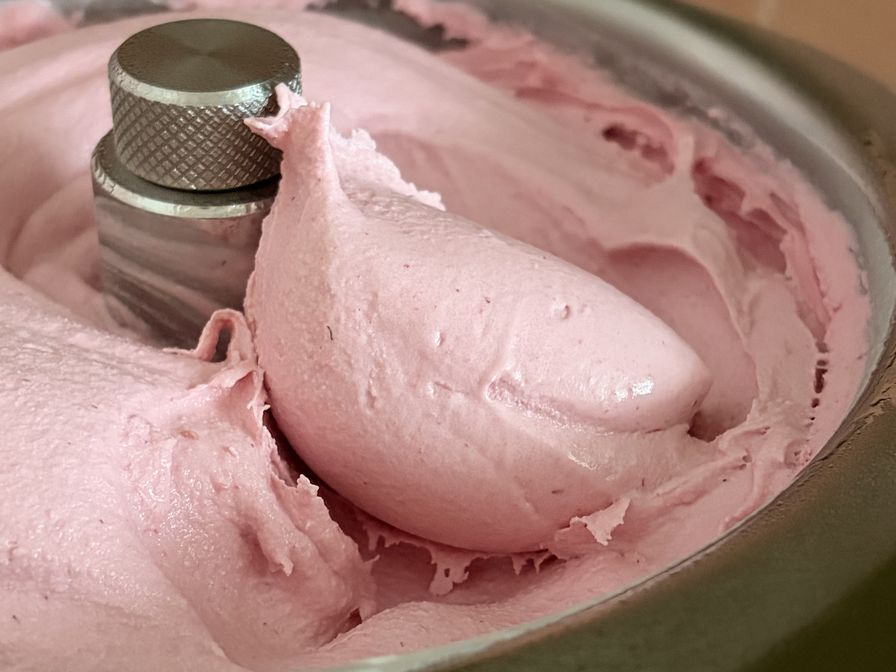
Gelato and ice cream are made the same way, but gelato has less fat, less air and is usually served a little warmer. Gelato typically runs around 4–9% fat; American ice cream must have at least 10% milkfat by law and often has much more. Ice cream is whipped with more air, and it's held colder. Less fat and less air make gelato denser, and they let the flavor come through more clearly. The machine can be exactly the same. The recipe isn't.
That's the textbook answer, and every page on this question repeats it. I wanted to taste it. So I made one raspberry recipe twice, once as gelato and once as ice cream, and changed only the dairy: more milk in one, more cream in the other. Below are both recipes, the numbers GelatoLator gives for each, and what they tasted like next to each other.
The Three Differences, in Numbers
| Gelato | Ice cream | |
|---|---|---|
| Fat | About 4–9% | At least 10% milkfat in the US, often much more |
| Air (overrun) | Churned slowly, very little air | From about 20% in dense premium tubs to 100% in light, cheaper ones |
| Served at | A little warmer, soft and elastic | Colder, firmer |
| Sugar | Similar, often a little more | Similar |
| Eggs | Optional (gelato alla crema has yolks, fior di latte has none) | Optional (custard style has yolks, Philadelphia style has none) |
Sources for the figures: the US standard for ice cream (21 CFR 135.110) sets the 10% milkfat minimum; the overrun range is from Penn State's Food Science Department. Gelato has no legal definition in the US, so its numbers describe what's typical, not a rule.
Fat
Fat is the biggest difference, and the one you can taste. Ice cream gets its richness from cream; gelato is mostly milk, with just enough cream for body. Fat coats the tongue and holds on to flavor, so a high-fat base tastes rich but releases fruit, nut or chocolate flavor more slowly. In a 2003 sensory study of ice creams at different fat levels (Chung, Heymann & Grün), the fruit flavor came through faster and stronger as the fat went down.
Air
Churning beats air into the base, and the extra volume it adds is called overrun: a liter of base that comes out as 1.5 liters has 50% overrun. Commercial ice cream is whipped on purpose, because air makes it lighter and a tub of air is cheap to fill. Gelato is churned more slowly and comes out dense. At home, the machine decides most of the air, not the recipe: my two batches went through the same machine, so the dairy was the only thing left to tell them apart. If you're choosing a machine, which gelato machine a beginner should buy shows how much the overrun changes from one machine to another.
Temperature
Gelato is served a little warmer, which is part of why it feels soft and stretchy and tastes stronger: cold numbs flavor. Ice cream is held colder and stays firm. A gelato recipe is built to stay scoopable a few degrees warmer instead of turning to soup.
That's the sugars' job. Every sugar lowers the freezing point, but each by a different amount, called its anti-freezing power or PAC: dextrose, for example, does almost twice as much as table sugar. So the mix of sugars, not only how much sugar there is, decides the temperature at which your gelato is still scoopable and not yet a cold soup. What Is PAC in Gelato? explains it step by step.
My Test: One Raspberry Recipe, Made Both Ways
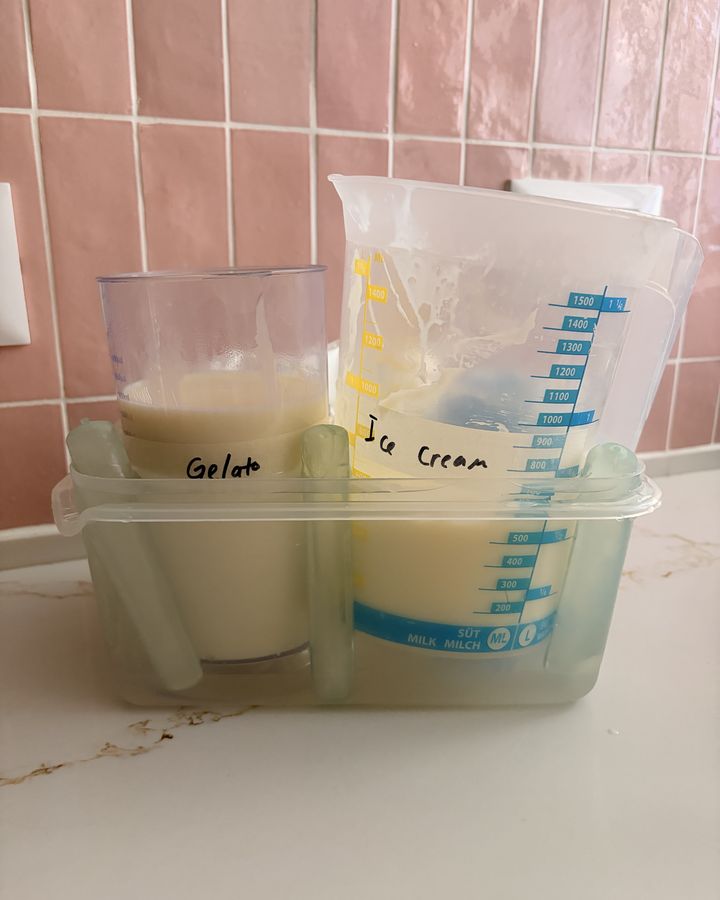
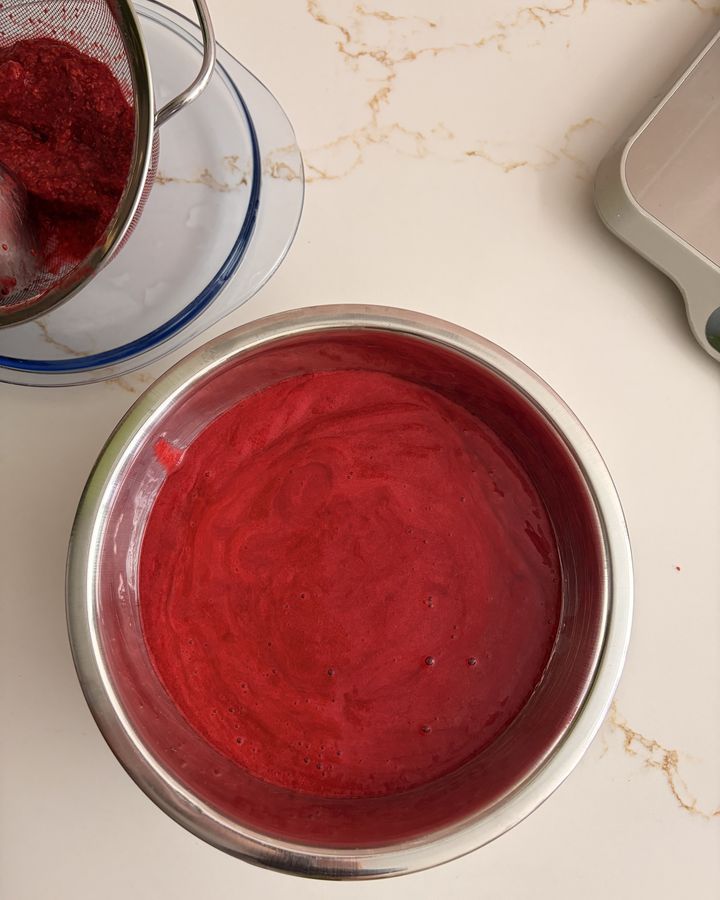
The two recipes share everything except the milk and the cream: the same strained raspberry purée, the same mix of sugar and dextrose, the same milk powder, stabilizer and water, and the same total weight, 1,094 g each.
| Gelato | Ice cream | |
|---|---|---|
| Milk (3% fat) | 300 g | 50 g |
| Whipping cream (38%) | 150 g | 400 g |
| Everything else | Same | Same |
| Fat | 6.1% | 14.1% |
| Total solids | 34.5% | 41.9% |
| Sugar · PAC · POD | 14.7% · 27 · 14 | 14.7% · 26 · 14 |
| Serving temperature | −13.5 °C | −13.2 °C |
Moving 250 g from milk to cream more than doubles the fat, from 6.1% to 14.1%, and adds about 7 points of total solids, almost all of it butterfat. Everything that depends on the sugars stays put: the same sweetness, nearly the same PAC, and nearly the same serving temperature. Both recipes are in GelatoLator's green zone, the gelato judged as Dairy Gelato and the ice cream as Ice Cream, each against its own targets.
Want to try it on your own recipe? Load it into GelatoLator, move some weight from milk to cream (or back), and watch the fat and total solids change while the sugars stay put.
How They Tasted
Both batches churned in the same machine and hardened overnight in the same freezer.
The gelato: the raspberry comes through a little more.
The ice cream: very rich, but the cream masked the sweetness of the fruit a little, so to me it tasted a little more tart.
The difference was small, but it goes the way the fat study above predicts: less fat, and the fruit comes through more clearly. The tartness is my impression; the two recipes have the same sweetness on paper. I like the gelato better, and for a fruit flavor like raspberry it's the one I'd make again.
The takeaway works for any flavor: fat is a flavor decision, not only a texture one. Fruit, pistachio and chocolate read clearer in a gelato base. Flavors that want richness, like vanilla custard or caramel, hold up well with more cream.
Is Gelato Healthier Than Ice Cream?
It's lower in fat, not in sugar. Per 100 g, my gelato has about 6 g of fat and the ice cream about 14 g, which at 9 kcal per gram is roughly 70 kcal more in the ice cream from the extra fat alone. The sugar is identical, 14.7%. Shop gelato often carries more sugar than ice cream, because sugar is what keeps it soft at its warmer serving temperature. So gelato is lighter in fat, but not a low-sugar dessert.
Can You Make Gelato in an Ice Cream Maker?
Yes. "Gelato maker" and "ice cream maker" are mostly marketing names for the same machine: a bowl that freezes the base while a paddle stirs it. Some machines come with a separate, slower gelato paddle that beats in less air, but any home machine makes good gelato from a gelato recipe. The recipe is what makes it gelato. If you're still choosing one, Which Gelato Machine Should a Beginner Buy? compares the three kinds.
To turn an ice cream recipe into gelato:
- Swap most of the cream for milk. Aim for about 6–8% fat in the finished mix.
- Add skim milk powder to replace the body the cream gave, so it doesn't turn icy.
- Rebalance the sugars for the new mix, using some dextrose so it stays scoopable.
- Check it against gelato targets, not ice cream ones.
How to Balance Any Gelato Recipe walks through the conversion with a real recipe.
Using an Ice Cream Calculator
GelatoLator started as a gelato calculator, and since November it also judges ice cream as ice cream. Set the recipe type to Ice Cream and the targets change: fat from 10% up to 20% instead of gelato's 3–12%, with the sugar, PAC and serving-temperature targets adjusted to match. A rich custard ice cream stops being flagged as "too much fat", and a gelato no longer gets judged by ice cream rules. Paste in your recipe, switch the type, and you can see which one it really is.
Check your gelato or ice cream recipeThe Short Version
Gelato is ice cream's leaner, denser cousin: less fat, less air, served a little warmer. Change only the dairy in one recipe and you can taste it. The gelato tastes a little more of the fruit, and the ice cream more of the cream. Pick the base for the flavor you want to come through, then balance it.
For the whole process, step by step, see How to Make Gelato at Home. For a classic dairy base to start from, the vanilla gelato bases come with and without eggs.
Frequently Asked Questions
What is the main difference between gelato and ice cream?
Fat, air and serving temperature. Gelato is mostly milk, with about 4–9% fat; US ice cream must have at least 10% milkfat and often has more. Gelato is churned with less air, so it's denser, and it's served a little warmer, so it's softer and the flavor comes through stronger.
Is gelato healthier than ice cream?
It's lower in fat, but not in sugar. In a raspberry recipe made both ways, the gelato had about 6 g of fat per 100 g and the ice cream about 14 g, with exactly the same sugar. Shop gelato often has a little more sugar than ice cream.
Does gelato have eggs?
Some does. Gelato alla crema, the classic Italian custard base, uses egg yolks; fior di latte and most fruit gelato have none. Ice cream is the same: custard-style ice cream has yolks, Philadelphia-style doesn't.
Can I make gelato in an ice cream maker?
Yes. Any home ice cream maker makes gelato. The machine freezes and stirs; what makes it gelato is a recipe with more milk, less cream and sugars balanced for a slightly warmer serving temperature.
Why does gelato taste stronger than ice cream?
Less fat and less air. Fat coats the tongue and holds on to flavor, so a lower-fat base releases fruit and nut flavors faster. Less air means more flavor in every spoonful, and the warmer serving temperature numbs your tongue less.
Why is gelato served warmer than ice cream?
Because its recipe is built for it. Gelato's sugars are balanced to keep it soft and scoopable a few degrees warmer than ice cream, which would turn soupy at the same temperature.